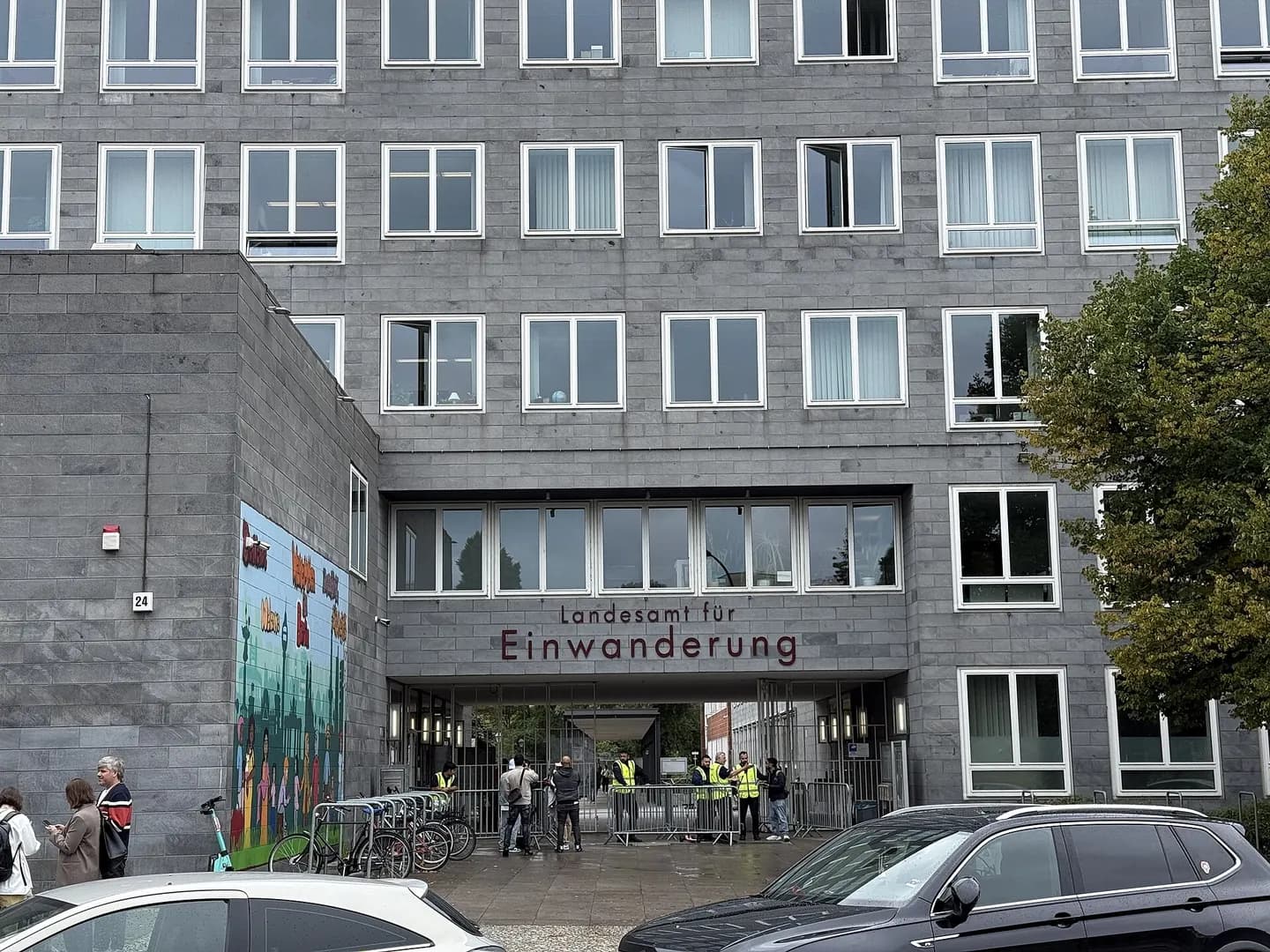
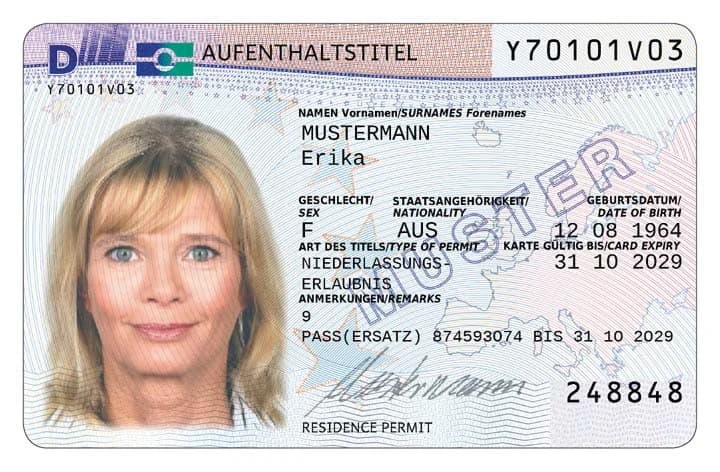
The standard route to the Niederlassungserlaubnis takes 5 years with a residence permit, 60 months of pension contributions, B1 German and an income that covers your living costs. Several groups get there sooner: EU Blue Card holders after 21 or 27 months, skilled workers after 3 years, spouses of Germans after 3 years.
Law checked on 12 November 2026. General orientation, not legal advice; your immigration office decides.
What does the standard route ask for?
The rule is § 9 of the Residence Act. If you meet every point on the list, the office has to issue the permit. It is not a favour.
- 5 years with a residence permit (Aufenthaltserlaubnis).
- Your living costs are covered by your own income, without Bürgergeld or social assistance.
- 60 months of contributions to the statutory pension insurance, or a comparable private scheme.
- B1 German. The law says “sufficient knowledge”, and § 2 of the same act defines that as B1.
- Basic knowledge of law and society. In practice: the “Leben in Deutschland” test.
- Enough living space for you and the family members who live with you.
- You are allowed to work and nothing in your record speaks against it (public safety and order).
Which routes are faster than 5 years?
Minimum periods from §§ 9, 18c and 28 Residence Act. The other requirements in the table still apply.
| Your situation | Waiting period | Pension contributions | German |
|---|---|---|---|
| EU Blue Card | 27 months (21 with B1) | for the same period | A1 (B1 for 21 months) |
| Skilled worker (§ 18a, 18b, 18d) | 3 years | 36 months | B1 |
| Skilled worker with a German degree or vocational training | 2 years | 24 months | B1 |
| Spouse, child or parent of a German | 3 years | no minimum in the law | B1 |
| Spouse of a skilled worker who already has the permit | 3 years, working 20+ hours a week | none of their own | B1 |
| Recognised refugee or person entitled to asylum | 5 years (3 with C1) | none | A2 (C1 for 3 years) |
| Self-employed (§ 21) | 3 years | none fixed | not fixed in the law |
Source: §§ 9, 18c, 21, 26 and 28 Residence Act, as of 12 November 2026.
You have worked on an EU Blue Card since 1 February 2025 and hold a B1 certificate. The 21 months are complete on 1 November 2026, so you can apply from that day. Without B1 you would wait until 1 May 2027 (27 months).
Two rows need a caveat. For the self-employed the office may issue the permit, it does not have to: your business must look stable and feed your family. For refugees the time of the asylum procedure counts towards the 5 or 3 years, the 5-year route asks that you cover most of your living costs yourself, the 3-year route nearly all of them.
Children are a separate case. A minor who has held a residence permit for 5 years on their 16th birthday gets the settlement permit without the pension or income checks (§ 35).
Which periods count, and which only count half?
- Study and vocational training count half. Four years as a student add two years to your standard 5-year count.
- Time abroad: up to 6 months per stay is still counted, as long as your permit did not expire while you were away.
- Married couples: on the standard route it is enough if one of you has the 60 pension months. The other spouse does not need their own.
- Childcare and care at home: career breaks for these reasons are credited towards the pension months.
The pension months are where applications usually stall. Ask Deutsche Rentenversicherung for your insurance record (Versicherungsverlauf) before you book an appointment, and count the months yourself. Gaps from a job change or a mini-job without pension contributions show up there, not on your payslips.
What does it cost and how do you apply?
The fee is fixed nationwide: 113 € in the normal case, 124 € for the self-employed, 147 € for the highly qualified (§ 44 Residence Ordinance).
You apply at your local immigration office (Ausländerbehörde). Do it before your current permit expires. If you do, your old permit keeps applying until the office decides, and you can ask for a certificate that says so (Fiktionsbescheinigung).
Offices publish their own document lists. They usually ask for your passport, the pension insurance record, recent payslips and your work contract, your rental contract, proof of health insurance, the language certificate and the test result.
Do you need it before you apply for citizenship?
No. The Niederlassungserlaubnis is not a step on the way to the German passport. After 5 years of lawful residence you can apply for citizenship directly, and the language and test requirements overlap almost completely.
The difference is the waiting. The settlement permit is decided by the immigration office. Citizenship goes through a separate, slower queue: people who logged their case on Citizify waited a median of 352 days from application to certificate (239 completed cases, as of 9 November 2026). These are voluntary reports, not official statistics.
What to do next
Check which of the two fits your plans, then look at how long your city really takes. The Citizify practice test covers the 30 national questions; state questions are not included yet.
Frequently asked questions
How many years do I need for the Niederlassungserlaubnis?
Five years with a residence permit on the standard route. EU Blue Card holders need 27 months, or 21 with B1 German. Skilled workers and family members of Germans need 3 years.
Is A2 German enough for the Niederlassungserlaubnis?
Only on two routes: A1 is enough for Blue Card holders after 27 months, and A2 for recognised refugees after 5 years. Everyone else needs B1.
Do I need the Einbürgerungstest for the Niederlassungserlaubnis?
You need to show basic knowledge of law and society, which is normally done with the “Leben in Deutschland” test or a completed integration course. It uses the same question catalogue as the Einbürgerungstest.
How much does the Niederlassungserlaubnis cost?
113 € in the normal case, 124 € for the self-employed and 147 € for the highly qualified. The amounts are set in § 44 of the Residence Ordinance.
Did this guide help you?
☕ Support Citizify
We create free resources for language learners. Your small contribution helps us keep going.
Thank you for your support! 💙